

Community News Quarterly | July 2025
Shaping Future Leaders: KGI Team Showcases Quality Management Insights at PDA 2025
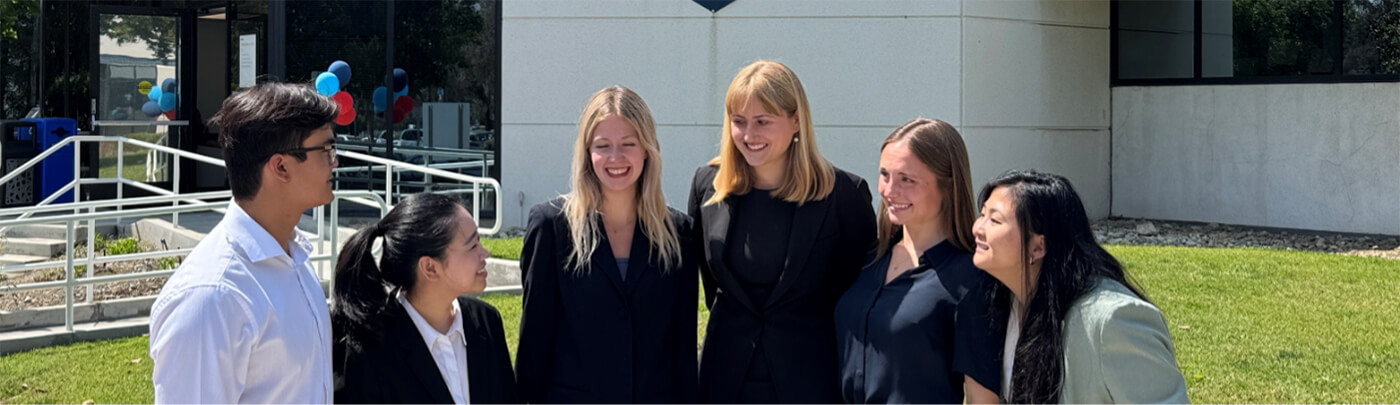 We are part of the Keck Graduate Institute’s (KGI) Team Master Project, which involves joint research
between PDA and KGI on the Quality Culture Assessment Tool analysis, providing valuable insights into quality practices within the industry. The PDA Conference 2025 provided our team with the opportunity to present our research findings to industry
professionals, facilitating knowledge exchange and emphasizing the importance of quality management maturity in the pharmaceutical industry.
We are part of the Keck Graduate Institute’s (KGI) Team Master Project, which involves joint research
between PDA and KGI on the Quality Culture Assessment Tool analysis, providing valuable insights into quality practices within the industry. The PDA Conference 2025 provided our team with the opportunity to present our research findings to industry
professionals, facilitating knowledge exchange and emphasizing the importance of quality management maturity in the pharmaceutical industry.
Claudia Gibson: The PDA Conference was an extremely valuable experience, as I was able to connect with industry professionals. I was also exposed to different specialized biotech companies that could cater to specific needs for drugs. My team presented our research findings and received interesting feedback and experiences on their biotech careers. Overall, the conference was very well put together, and I had a great experience and insightful conversations with the professionals.
Claire Manning: “I really appreciated the opportunity to be able to meet so many interesting people who work in the industry. I learned a lot about other industry sectors, like sterilization, that I did not know as much about prior to this conference!”
Alejah Diaz: The PDA Conference was an incredibly eye-opening experience as a student pharmacist. It gave me the chance to explore the biotech and pharmaceutical industries beyond the classroom and connect with professionals from all corners of the field — from regulatory affairs and quality management to research, manufacturing and global supply. I met so many different people with diverse career paths, and hearing about their journeys helped me see just how many opportunities are out there for Phar.Ds. Presenting our work to a handful of industry experts was a true highlight, and the feedback and conversations that followed were both encouraging and insightful. It was an invaluable experience that broadened my perspective on what’s possible in this profession.
Siena Samione: “The PDA Conference was an extremely valuable time for us all to get exposure to the biotech and pharmaceutical industries. We were able to connect with professionals from a variety of different backgrounds, and it was incredibly helpful to hear about their career journeys in the industry. It was also a great experience presenting to experts in the area and engaging in insightful discussions after our presentation.”
Dylan: The PDA Conference was an unforgettable experience that opened my eyes to the professional world surrounding pharmaceutical drug manufacturing. Attending several talks led by pioneers in different fields showcased what is happening at the forefront of this industry. Just walking around and speaking with others helped expose me to how one should conduct themselves in a professional setting and how to have confidence when speaking to experts. Additionally, the invaluable guidance from our liaison, Jason Kerr, has been unmatched. He has single-handedly shaped the way I view my career moving forward and has taught me how to build my career in the long run. PDA has truly been an organization that has had a profound impact on me, and I cannot thank them enough.
Ava: The PDA Conference was an absolutely incredible experience. Being able to attend seminars on exciting new technology within the biotechnology industry, as well as talk to professionals in the field, taught me so much about the importance of networking and opened my scope to careers I previously had not known about. The support and guidance from our liaisons, alongside being able to hear advice from people in the field in a professional environment, is an experience I will always value and remember.
Key Takeaways:
- Global networking: The event created unique opportunities for students to exchange insights and allow meaningful conversations that could potentially help them find their interests.
- Real-world impact: Students were exposed to companies with various specializations and learned how they can be part of the industry to make an impact.
- Diverse career exposure: The conference provided insight into various careers in the biotech industry and encouraged future leaders.
Conclusions
The testimonials above depict the valuable experiences gained through the conference and highlight the importance of networking and continuous learning. The conference serves as a catalyst for professional growth and fosters industry connections.
PDA DACH Chapter Learning Webinars Journey: Be Part of the Discussion
 In the pharmaceutical industry, knowledge sharing and building upon one another’s insights help us progress. That is what
the PDA's newest regional chapter — the DACH Chapter, representing Germany, Austria and Switzerland — aims for with its webinar series: Elevating the Industry by Working Together and Learning from Each Other.
In the pharmaceutical industry, knowledge sharing and building upon one another’s insights help us progress. That is what
the PDA's newest regional chapter — the DACH Chapter, representing Germany, Austria and Switzerland — aims for with its webinar series: Elevating the Industry by Working Together and Learning from Each Other.
Attendees have the opportunity to learn from industry experts who share their perspectives on key topics in the pharmaceutical industry and are encouraged to bring additional discussion points.
The chapter kicked off its webinar series at the end of 2024 with the topic of primary packaging components, co-presented by Ana Kuschel (West Pharmaceutical Services) and Florence Buscke (Schott). Primary packaging is a crucial and often underrated aspect of the pharmaceutical industry. Maintaining container closure integrity is paramount in pharmaceutical packaging, serving as a crucial defense against potential contamination, ensuring product stability and sterility, and safeguarding the drug's efficacy throughout its shelf life. Moreover, in the realm of complex drug molecules, the imperative for high-quality primary packaging emerges as a critical factor in ensuring product efficacy, safety and regulatory compliance. Ana and Florence dived into the packaging essentials for ampoules, vials, syringes and cartridges, as well as their applications, and presented very useful decision trees, best practices and common pitfalls with a focus on the physical and chemical performance of packaging materials.
2025 started with the visual inspection webinar, drawing more than 400 global attendees. This strong participation underscores the industry's interest in visual inspection and particle-related challenges. In an ever-changing regulatory industry, Roman Mathaes (Clear Solutions Laboratories), Elisabeth Wagner (CSL Behring) and Markus Adlberger (Körber Pharma) discussed the presence of particles in injectable products, which remains a significant concern for the pharmaceutical industry. The panelists explored the evolution of visual inspection advancements — in particular, automated visual inspection (AVI) — and how AVI can help identify detailed patterns and make precise judgments about product quality, particularly the qualification, validation and regulatory acceptance of automated systems, as well as the increasing use of machine learning and artificial intelligence. The need for global harmonization of regulatory expectations across different regions was also discussed, for example, a structured approach of organizations when it comes to particulate analysis (Community News Quarterly | April 2025 | PDA).
The last webinar was a great dive into the journey of start-ups, full of practical examples, challenges and success stories. Bianca Bohrer (PSM), Svetlana Kiseleva (Plair SA), and Lara Denk (Ludwig Maximilian University) shared with the audience their learnings from the exciting yet challenging world of life science start-ups. How do start-ups navigate the transition from concept to full establishment in the market, and the unique differences between global regions? Lara presented data from her research regarding start-ups in Germany and the United States, highlighting the main differences. In doing so, she addressed the countries’ particular strategies to invest in innovation and new technologies at an early stage. Bianca Bohrer discussed the requirements and challenges of designing and establishing a new facility for a Contract Development and Manufacturing Organization (CDMO). Her talk also addressed considerations regarding the requirements of the revised EU GMP Annex 1: Manufacture of Sterile Medicinal Products and the integration of new technologies. Bianca concluded with a case study on the PSM “Robocell”: a glove-less aseptic filling isolator that enables a fully automated process. To enable an automated process in non-viable and viable environmental monitoring, Svetlana shared her co-founding start-up experience in the field. The topics covered the development of novel technologies around particle and microbiological monitoring (BFPC – Biofluorescent Particle Counting), optical detection, as well as the challenges of establishing a new technology in a highly regulated pharmaceutical environment. To provide an opportunity for knowledge sharing, the PDA DACH Chapter plans to establish an expert circle on the topic of start-ups.
The upcoming webinar hosted by the PDA DACH Chapter will address fill and finish operations. As panelists, Julian Petersen (Groninger) and Thorsten Haefner (PSM) will discuss the essentials of fill and finish technologies and the design of a GMP-compliant and efficient fill-and-finish process. Focus will be given to the environment in which this activity is performed, the equipment and technologies that are used, and the appropriate control of the process, ensuring process assurance and repeatability. Examples of risks that can potentially lead to product quality issues, contamination or improper packaging will be highlighted, as well as the impact of new regulations on sterile filling and processing operations, and how those will change the way we work in the pharmaceutical industry.
A sincere thank you to all speakers, participants, and organizers who made the PDA DACH Chapter webinar series a success. We look forward to welcoming you to our next event!
Stay up to date on the latest PDA DACH activities.
PDA Hosts Diverse Group for Fundamentals of Lyophilization at TRI
 On April 29th and 30th, the PDA welcomed a diverse group of industry and regulatory professionals to its
popular Fundamentals of Lyophilization course at the PDA Training and Research Institute (PDA TRI). The event included participants from both the pharmaceutical industry and government agencies, with nearly half of the attendees from Health
Canada.
On April 29th and 30th, the PDA welcomed a diverse group of industry and regulatory professionals to its
popular Fundamentals of Lyophilization course at the PDA Training and Research Institute (PDA TRI). The event included participants from both the pharmaceutical industry and government agencies, with nearly half of the attendees from Health
Canada.
Led by lyophilization expert Ed Trappler, the course provided a comprehensive overview of the fundamental scientific principles that are the foundation of lyophilization technology. Topics included principles such as phase diagrams, the Ideal Gas Law and heat and mass transfer, as well as applying these core concepts to define critical process parameters (CPPs) and establish critical quality attributes (CQAs).
Lively group discussions enriched the two-day program, covering key issues in development, routine manufacturing and quality aspects. Some highlights included:
- Raw Material Impact: The purity and physicochemical character of the drug substance and formulation components have a significant influence on the outcome of the finished product. Notably, changes to formulation components should be evaluated across analytical comparability, process performance and product CQAs.
- Cracked Cake Observations: Participants explored the causes and implications of cracked cakes, concluding that while these occurrences are often formulation-dependent and linked to freezing behavior, they are typically cosmetic and not indicative of product defects.
- Packaging Interactions: The course also addressed the critical influence of primary packaging on lyophilization, highlighting the need for integrated product-process-package considerations.
Throughout the course, participants engaged in active dialogue, frequently expanding beyond the agenda to explore specific areas of interest to the participants. The interactive format, combined with expert instructions, earned high marks in post-course evaluations, with attendees noting the immediate applicability of the materials to their work.
This course continued to be a valuable resource for professionals seeking to deepen their understanding of lyophilization science and its application in today’s pharmaceutical landscape.